Service 03 / 07
Water Heater Repair and Installation in Denver
We find out whether your water heater needs a part, a flush or replacement, and explain the trade-offs before work starts.
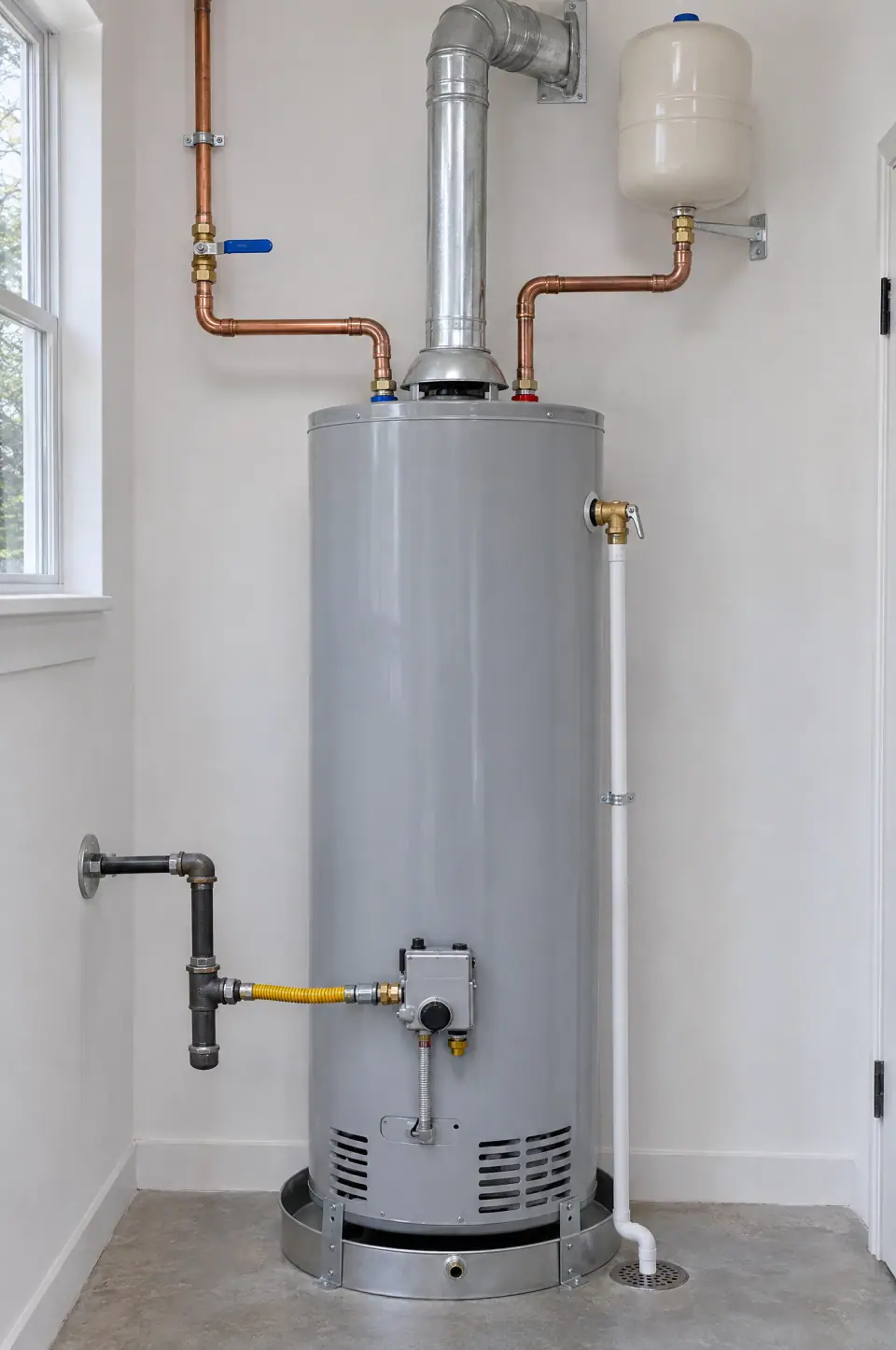
Most water heater repair in Denver comes down to a short list: a gas burner that won't light or stay lit, a burned-out electric element, sediment rumbling in the tank, or a dripping relief valve. Those are usually fixable. A tank that leaks from its own shell is not, and then the conversation turns to water heater replacement.
Plumber Denver repairs and installs tank, tankless and heat pump water heaters for homes and businesses from Colorado Springs to Fort Collins. Below: how we separate a repair from a replacement, and what Denver's elevation and permit process change about an install.
Method
How the work is done
- 01
Check the basics
We confirm gas supply, ignition, breaker, element condition and thermostat settings before condemning any part.
- 02
Read the rating plate
The label gives age, capacity, input and approved altitude range. We inspect the tank base, fittings and venting.
- 03
Recommend repair or replacement
You get the likely cause and what each option means for the heater's remaining life.
- 04
Install to current code
Replacements get the required permit, correct venting, expansion control where needed and a relief valve drain piped to a safe spot.
How a water heater wears out
A gas tank heater is a glass-lined steel tank with a burner underneath and a sacrificial anode rod inside that corrodes so the tank doesn't. Most failures trace back to one of these:
- Sediment. Minerals settle on the tank floor. On gas units they insulate the steel from the flame, causing rumbling, slow recovery and an overheated tank bottom. On electric units they can bury the lower element.
- Ignition and controls. Thermocouples, igniters and gas valves wear out on gas heaters; elements and thermostats on electric ones. These are repairs.
- Anode depletion. Once the anode is gone, the water attacks the tank. Replacing the rod early is inexpensive; afterward it does little.
- Relief valve. A dripping relief valve may be worn, or it may be reacting to real pressure spikes. Replacing it without finding out which is a common mistake.
Tankless units scale up inside the heat exchanger instead. Annual descaling, covered under plumbing maintenance, prevents much of that.
Repair or replace: how the decision usually goes
Age matters, but it isn't the whole answer. The manufacture date is on the rating plate, often coded into the serial number. An old heater with a failed gas valve is a different call from a five-year-old unit with the same fault.
| Symptom | Usual cause | Typical recommendation |
|---|---|---|
| Pilot won't stay lit | Thermocouple or flame sensor | Repair |
| No hot water, electric unit | Element or thermostat | Repair |
| Rumbling, slow recovery | Sediment | Flush; replace if old and heavily scaled |
| Relief valve dripping | Worn valve or thermal expansion | Test pressure, add expansion control or replace the valve |
| Rusty hot water | Spent anode or tank corrosion | Pull the anode; replace if the tank is rusting |
| Leak from the tank body | Failed tank lining | Replace |
Leaks at a fitting or drain valve can be fixed. A leak from the tank shell can't, and it gets worse without warning. If the floor is damp and the source isn't obvious, our leak repair service can trace it.
What altitude and local code change about an install
Gas appliances are rated for specific altitude ranges, and every water heater's installation manual states its range. Some standard models are approved for Denver's elevation as built; others need a high-altitude version or a field adjustment, and most gas tankless units have an altitude setting in their controls. We check the rating against the address before ordering.
An atmospheric water heater often shares a flue with an older furnace. Replace that furnace with a high-efficiency model vented through the wall, and the water heater is left alone in a flue sized for two appliances, where it may not draft properly. A backdraft test catches it.
When the main has a pressure-reducing valve or check valve, heated water has nowhere to expand, and the plumbing code calls for an expansion tank or similar device on storage heaters.
Choosing between tank, tankless and heat pump
A like-for-like tank swap is the simplest job: same fuel, same spot, usually the same venting.
Gas tankless units heat on demand and don't run out between showers; ENERGY STAR cites a life expectancy around 20 years. They draw far more gas while firing, so many homes need a larger gas line and new venting. In winter, colder incoming water means fewer gallons per minute at shower temperature.
Heat pump water heaters pull heat from the surrounding air. They need floor space, air volume, a condensate drain and usually a dedicated circuit, and they cool the room they sit in. Xcel Energy and state programs have offered rebates; terms change, so confirm eligibility before buying.
Before any visit:
- Photograph the rating plate on the side of the heater.
- If it's leaking, close the cold valve above the heater and turn off the breaker or set the gas control to off.
- Clear stored items away from the venting and valves.
Ready to have it looked at? Send the details and we will confirm a time.
Request ServiceFAQ
Water Heater Repair & Installation questions
Do I need a permit to replace a water heater in Denver?
Generally yes. Denver's Community Planning and Development issues residential water heater permits as Quick Permits, and the permit leads to an inspection of venting, relief valve piping and connections. Aurora, Lakewood, Littleton and other suburbs have their own building departments and rules, so confirm with the department that covers your address.
How long does a water heater last in Colorado?
A tank heater commonly lasts around a decade, longer with regular flushing and an anode replacement, less when sediment is heavy. ENERGY STAR cites about 20 years for gas tankless units with proper maintenance. The manufacture date is on the rating plate, often coded into the serial number, so check the age before deciding on a repair.
Is a tankless water heater worth it in Denver?
It depends on the house. Tankless units don't run out and last longer, but many homes need a larger gas line and new venting to support one, and winter output drops because incoming water is colder. For a small household, a like-for-like tank replacement is simpler and often the better fit.
Why does my hot water smell like rotten eggs?
Usually bacteria in the water react with the tank's anode rod and produce hydrogen sulfide, so only the hot side smells. Swapping the anode for a different alloy or a powered anode typically fixes it. If the smell is in the air near the heater rather than in the water, treat it as a possible gas leak and call your gas utility from outside.
Water Heater Repair & Installation across the Front Range
Request service
Ready when you are.
Tell us what is going on and where. We will confirm the details and set a time that works for you.