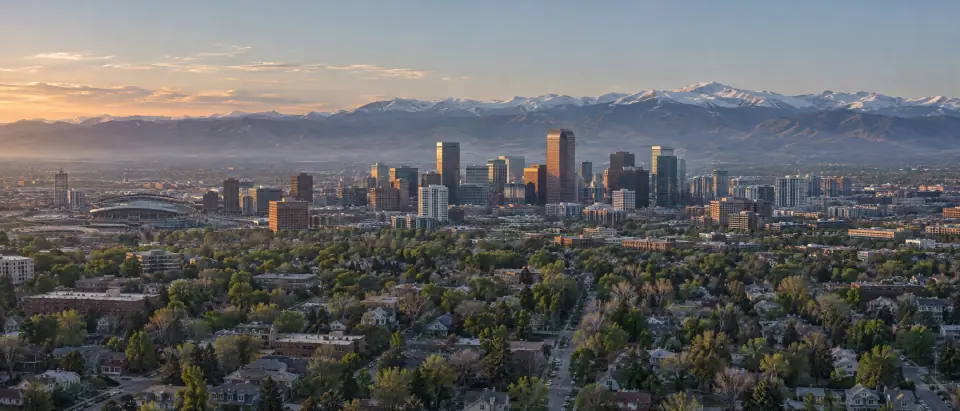
Denver Metro / Arapahoe County
Englewood, CO Plumber for Older Homes and Businesses
Pipe, drain, sewer and water heater work for Englewood's older houses, mid-century modern homes and Broadway storefronts, on a water system the city runs itself.
Plumber Denver is a plumber in Englewood, CO for homeowners, landlords and businesses. We repair leaks and worn-out supply pipe, clear drains, inspect and repair sewer lines, replace water heaters and install fixtures.
Englewood sits directly south of Denver, and much of its housing went up before modern plumbing materials were common. The city also does something many of its neighbors don't: it treats and delivers its own drinking water.
From City Ditch to the kitchen tap
Raw water reaches the Allen plant two ways: pumped from the South Platte at the Union Avenue Pump Station, and by gravity through City Ditch. McLellan Reservoir, which the city built in 1965 near County Line Road and Santa Fe Drive, stores water pumped from the river. The city has also been converting the remaining open stretch of City Ditch between Chatfield Reservoir and the plant to buried pipe.
For a homeowner, the practical point is simple. Englewood Utilities is who you call about the main and the meter, and its report is the one that applies to your tap. Mineral content affects how quickly scale builds in a tank, so read the hardness figures before deciding whether a softener or more frequent water heater service makes sense.
Plumbing materials by era in Englewood housing
Englewood's 40 officially mapped neighborhoods cover a long building history. This table shows what is commonly found in each era; your house may have been updated since.
| Era | Common materials | What tends to fail |
|---|---|---|
| Early 1900s to 1940s | Galvanized supply, cast iron drains, clay tile sewer lateral | Low pressure, rusty water, root clogs |
| Late 1940s to 1960s, including Arapahoe Acres (built 1949 to 1957) | Galvanized or copper supply, cast iron drains | Corroded drain lines, original valves |
| Infill and townhomes, 2000s on | PEX or copper supply, plastic drains | Fittings, fixture cartridges, tank sediment |
A partial or full repipe is common in houses this age. The choice usually comes down to how much galvanized pipe is left and whether the walls are already open for other work.
Five signs the sewer lateral needs a camera
- Gurgling in a tub or toilet when the washing machine drains
- Water coming up through the basement floor drain
- More than one fixture slowing down at the same time
- A clog that returns within weeks of being cleared
- A soggy or unusually green strip of lawn over the sewer line route
If any of these sound familiar, start with a sewer line inspection rather than another round of snaking.
FAQ
Plumbing questions from Englewood
Where does Englewood get its drinking water?
Englewood runs its own utility. It takes water from the South Platte River and City Ditch, stores river water in McLellan Reservoir, and treats it at the Charles Allen Water Treatment Plant before sending it through the city's distribution pipes. Englewood Utilities publishes an annual water quality report with test results for the system.
Should I replace galvanized pipes in an older Englewood house?
If you have weak pressure at upstairs or distant fixtures, rusty water after the tap sits, or repeated leaks at threaded joints, galvanized pipe is the likely cause. It corrodes from the inside and does not improve. Replacing the worst runs first is an option, but a full repipe is often simpler when walls are already open for a remodel.
Who treats wastewater from Englewood homes?
South Platte Renew, which began operating in 1977 as the Littleton and Englewood joint use wastewater plant. It treats wastewater from both cities and a number of connecting districts. Backups, roots and broken pipe in a home's own drain and sewer lines are a plumbing repair, not something the treatment plant handles.
Request service
Plumbing service in Englewood.
Tell us what is happening and where. We will confirm the details and set a time.