Service 01 / 07
Drain Cleaning in Denver
A slow drain is a symptom. The cause might be grease, hair, wipes or tree roots, and each calls for a different tool and follow-up.
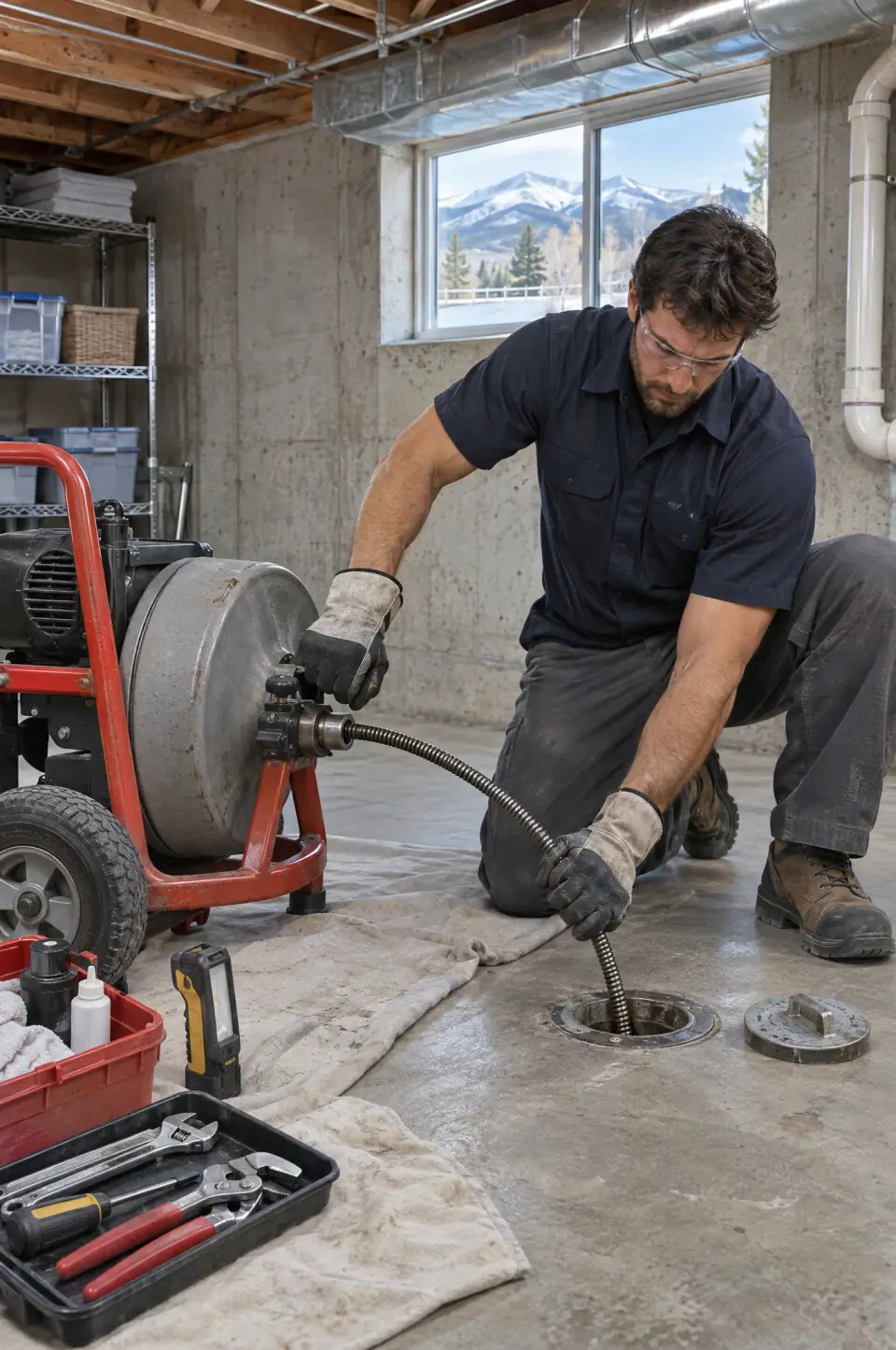
Drain cleaning in Denver starts with one question: where is the blockage? A single slow bathroom sink is a trap or branch line problem. Water rising out of a basement floor drain when the washing machine empties points to the main line, the pipe carrying everything out to the public sewer. Treating a main line clog like a sink clog usually means it comes back.
Plumber Denver clears clogged drains in homes and commercial buildings across the metro and the wider Front Range, and recommends a camera inspection when the pattern points to more than a one-time clog.
Method
How the work is done
- 01
Find the blockage
We run fixtures in a set order to see whether the clog sits in one branch or in the main line.
- 02
Pick the access point
Branch clogs are cleared at the trap or fixture. Main line work goes through a cleanout, or a pulled toilet if no cleanout is usable.
- 03
Clear and confirm
We clear the line with a cable machine or water jet, then run enough water to show it drains at full volume.
- 04
Inspect repeat problems
For repeat main line clogs, a sewer camera shows whether roots, a broken joint or a sag is the cause.
How clogs build up in different parts of the house
Most clogs follow the fixture. Kitchen lines collect fats, oils and food scraps that cool and stick to the pipe wall. Bathroom sinks and tubs collect hair bound up with soap. Toilets clog on paper, or on things that should never be flushed. The City and County of Denver's wastewater guidance tells residents not to pour grease down disposals, toilets or floor drains and not to flush wipes, diapers or hygiene products.
Main line clogs are a different category:
- Tree roots grow toward moisture and enter through joints in older clay or cast iron sewer pipe.
- Offset or broken joints leave a lip that catches paper and solids.
- Sags (bellies) hold standing water and let waste settle out.
- Grease from years of kitchen use can narrow the line well past the kitchen.
Freeze-thaw cycles and the expansive clay soils in parts of the Front Range can shift buried pipe. A clog caused by pipe damage keeps returning, and that calls for sewer line repair.
Cable machine or water jet: choosing the method
The right tool depends on what is in the pipe and what condition the pipe is in.
| Method | Works well for | Limits |
|---|---|---|
| Hand auger | Sink traps, tub drains, toilets | Short reach; not for main lines |
| Cable machine (drain snake) | Hair, paper, solid blockages, cutting roots | Opens a path but can leave grease and root fragments on the pipe wall |
| Water jetting | Grease, sludge and root fines in sound pipe | Poor choice for pipe that is already cracked, collapsed or badly corroded |
| Chemical drain cleaner | Minor slow drains, at best | Rarely clears a full clog; harsh on older pipe and hazardous for whoever opens the line next |
For an older home with a clay or cast iron lateral, we usually clear the line with a cable first and look with a camera before deciding on jetting, because jetting a cracked pipe can make the crack worse. On a newer PVC line coated with grease, jetting is often the better first choice since it cleans the whole pipe wall.
When a clog is really a sewer line problem
If more than one fixture is affected, and especially if water shows up at the lowest drain in the house, assume the main line is involved.
Denver maintains the public sewer mains. According to the city's Department of Transportation and Infrastructure, the service line (lateral) from the house to the main is the property owner's responsibility, up to and including the tap into the main. If neighbors are backing up at the same time, the public main may be the problem, and the city's Wastewater Management division asks residents to report sewer backups. Other cities and sanitation districts set their own rules, so confirm with your utility.
Repeat main line clogs deserve a camera inspection rather than another cleaning. If roots are the only issue, scheduled plumbing maintenance may keep the line open.
What to do before the visit
- Stop running water to the affected fixtures, or to the whole house if the main line is involved.
- Skip the chemicals. Caustic cleaner sitting in a blocked line makes the job slower and more dangerous to open.
- Find the cleanout if you can. It is usually a capped fitting on the main drain, often in the basement near where the sewer line leaves the house. Some homes have an outdoor cleanout near the foundation.
- Clear access to the cleanout, the affected fixtures and the floor drain, including stored boxes and furniture.
- Note the pattern: which fixtures backed up, in what order, and what was running at the time.
If the cleanout area is flooded, leave the cap alone; opening it under pressure can release a surge of sewage. If the trouble turns out to be a cracked or corroded section inside the house, our pipe repair page covers what comes next.
Ready to have it looked at? Send the details and we will confirm a time.
Request ServiceFAQ
Drain Cleaning questions
How much does drain cleaning cost in Denver?
It depends on where the clog is and how the line is reached. A main line cleared through an accessible cleanout takes less time than one that requires pulling a toilet, and a camera inspection is a separate step. Ask for the price of the specific method before work starts, and ask whether a camera inspection is included.
Is hydro jetting safe for old pipes?
Jetting is safe for pipe in sound condition, including older pipe. It is a bad idea for clay or cast iron that is already cracked, separated or heavily corroded, because the water pressure can make existing damage worse. That is why a camera look before jetting an older main line is a sensible step.
Why does my basement floor drain back up when I run the washing machine?
A washing machine sends a large volume of water down the drain quickly. If the main line is partly blocked, that water cannot get past the restriction and comes back up at the lowest opening, usually the basement floor drain. The fix is cleaning the main line, not the floor drain.
Who is responsible for a sewer clog between my house and the street in Denver?
The City and County of Denver states that the sewer service line is the property owner's responsibility up to and including the tap into the main. The city maintains the public main itself. If you suspect the main is blocked, for example because neighbors are backing up too, report it to the city. Rules differ in other cities, so check with your local utility.
Drain Cleaning across the Front Range
Request service
Ready when you are.
Tell us what is going on and where. We will confirm the details and set a time that works for you.