Service 02 / 07
Leak Repair in Denver
Water rarely shows up where the leak is. It runs along pipes and framing first, so the repair starts with tracing it back to the source.
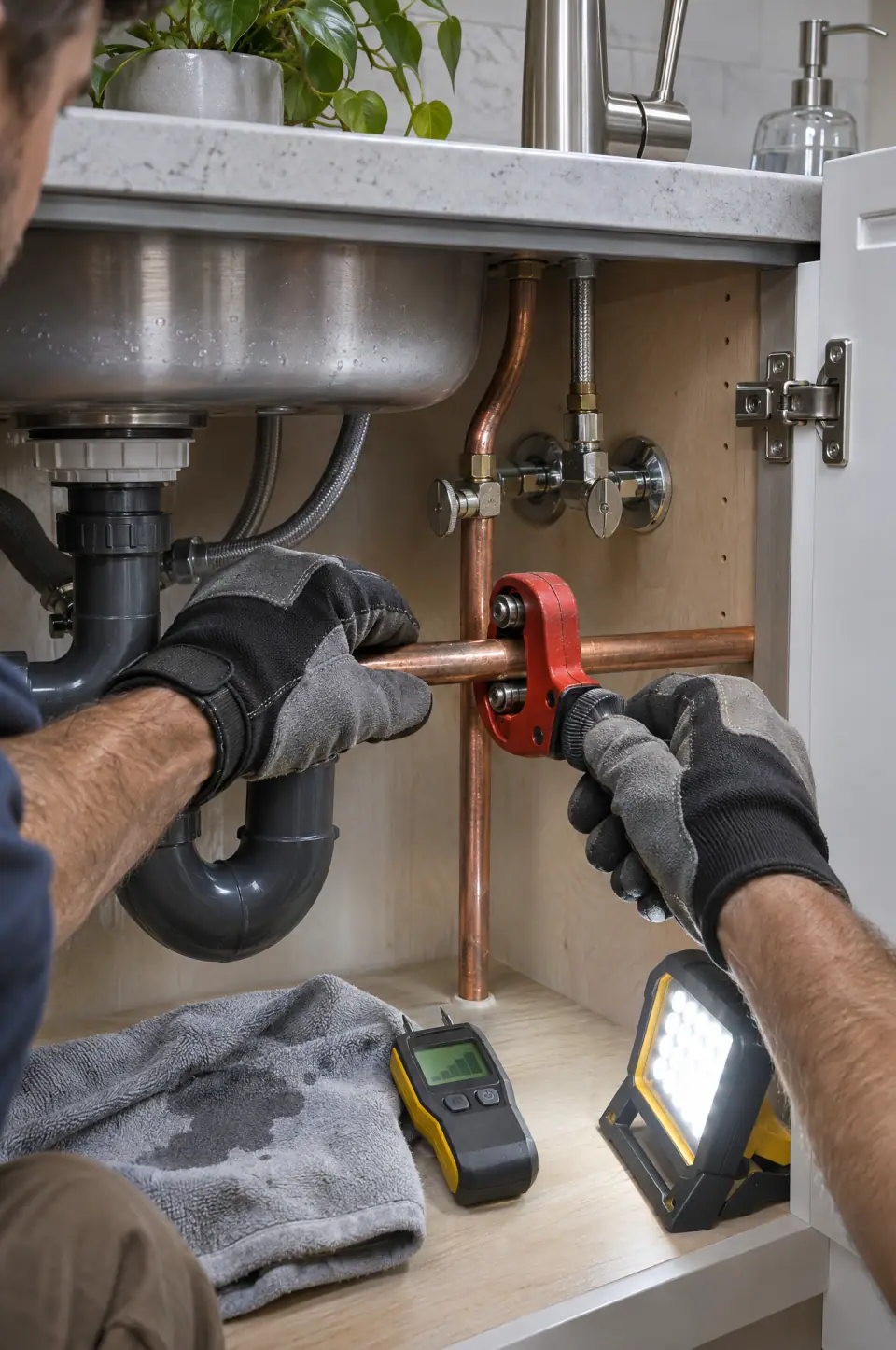
Leak repair in Denver is mostly detective work. Water follows pipes, joists and the back side of drywall before it shows, so a stain on a basement ceiling can come from a toilet seal two rooms away. Cutting open the wall under the stain often finds wet framing and no leak.
Plumber Denver repairs water leaks in supply piping, drain lines, fixtures and water heater connections for homes and commercial properties. We confirm a leak exists, narrow it down, and then open only what the repair requires.
Method
How the work is done
- 01
Confirm the leak
With every fixture off, we watch the meter's leak indicator or dial to confirm water is moving and gauge how fast.
- 02
Isolate the section
Closing valves one area at a time narrows the leak to a supply branch, a fixture or the service line outside.
- 03
Pinpoint the source
Moisture readings, visual tracing and pressure testing locate the leak before drywall or flooring is opened.
- 04
Repair and retest
We replace the failed fitting or section with compatible material, then put the line back under pressure and check for drips.
Where leaks start in a typical home
Some leak sources come up far more often than others, and most of them can be checked without tools:
- Supply hoses and shutoff valves under sinks and toilets, especially older rubber hoses and compression fittings.
- Toilet flappers and fill valves, which leak silently into the bowl and show up only on the bill.
- Toilet wax seals, which leak a little with each flush onto the subfloor.
- Water heater connections and the relief valve discharge line.
- Exterior walls and hose bibs after a hard freeze. A split pipe often stays quiet until it thaws.
- Pinhole leaks in older copper, which tend to repeat along the same run.
A toilet is easy to test: put a few drops of food coloring in the tank and wait without flushing. Color in the bowl means the flapper is leaking. If the leak is in pipe that is corroding throughout, patching one spot buys time, and our pipe repair and repiping page explains when replacement makes more sense.
Slab leak signs and repair options
Many Denver-area houses have basements, but basement floors and slab-on-grade homes both carry water or drain piping under concrete. A pressurized leak there can run for a long time before it surfaces. Watch for a meter that moves with everything off, a warm spot on the floor (a hot water line), damp carpet with no visible source, or the sound of water under the floor.
The Colorado Geological Survey documents swelling clay soils across parts of the Front Range urban corridor. Soil that swells and shrinks with moisture puts stress on concrete and on pipe that passes through or under it.
| Approach | When it fits | Trade-offs |
|---|---|---|
| Spot repair through the slab | One leak, located precisely, in otherwise sound pipe | Concrete and flooring must be opened and patched |
| Reroute the line | Pipe under the slab is aging or has leaked before | New pipe runs through walls or ceilings; more wall openings, no slab work |
| Repipe the affected branch | Several leaks or failing pipe material | Larger job, but removes the under-slab pipe from service |
The water service line is usually yours
Denver Water's published rules say the service line between the main and the house is owned by the property owner and installed at the owner's expense. Owners also maintain the stop box and curb stop valve, though Denver Water replaces broken stop box covers. Denver Water states that it is not responsible for water damage caused by a property's service line or internal plumbing, and it suggests checking with your insurance agent about coverage.
A service line leak can show up as a strip of lawn that stays green or soggy in dry weather, water in the meter pit, or low pressure throughout the house.
Suburbs and districts outside Denver Water's service area set their own rules, so check with your provider.
The first ten minutes of an active leak
- Close the main shutoff. It is usually where the water line enters the house, often in the basement or next to an indoor meter.
- Open a low faucet, such as a basement sink or exterior hose bib, to drain pressure off the system.
- Protect the water heater. If the leak involves it, turn a gas unit's control to pilot or switch off the breaker for an electric unit.
- Kill power to wet areas at the breaker if water is near outlets or fixtures.
- Photograph the damage and any wet materials before cleanup, for your insurer.
Then leave the water off until the leak is found. Turning it back on to see where the water comes from usually means another round of damage. Leaks at the tank itself are covered on our water heater repair page, and slow leaks at hoses and valves are the kind of thing routine plumbing maintenance is meant to catch.
Ready to have it looked at? Send the details and we will confirm a time.
Request ServiceFAQ
Leak Repair questions
How do I know if I have a slab leak?
Turn off every fixture and appliance that uses water, then watch the meter. If the leak indicator or dial keeps moving, water is leaving the system somewhere. Combine that with warm or damp spots on a concrete floor, cracks that appear suddenly, or the sound of running water under the floor, and a slab leak becomes likely.
Who fixes a leak in the water line between the street and my house in Denver?
Under Denver Water's rules, the service line belongs to the property owner, so repairs are the owner's responsibility and are done by a plumber the owner hires. Denver Water maintains the water mains. If the line is lead, its Lead Reduction Program may replace it at no direct charge. Customers of other water providers should check their provider's rules.
Can a leak be repaired without tearing out walls?
Often the opening can be kept small. Tracing the leak before cutting, accessing pipe from an unfinished basement ceiling or an adjoining closet, and rerouting a line instead of digging it out all reduce damage. Some leaks still require opening a wall or floor, and wet drywall or insulation should come out anyway to dry the framing and prevent mold.
Is a pinhole leak in copper a sign I need to repipe?
One pinhole can be a single defect. Repeated pinholes along the same run usually mean the pipe wall is thinning, and the next leak is likely nearby. At that point, replacing the affected run, or repiping if the problem shows up in several areas, tends to cost less than paying for repeated repairs and the water damage each one causes.
Leak Repair across the Front Range
Request service
Ready when you are.
Tell us what is going on and where. We will confirm the details and set a time that works for you.