Service 07 / 07
Plumbing Maintenance in Denver
A scheduled look at valves, pressure, the water heater and outdoor plumbing, timed around the Front Range's freeze-thaw seasons.
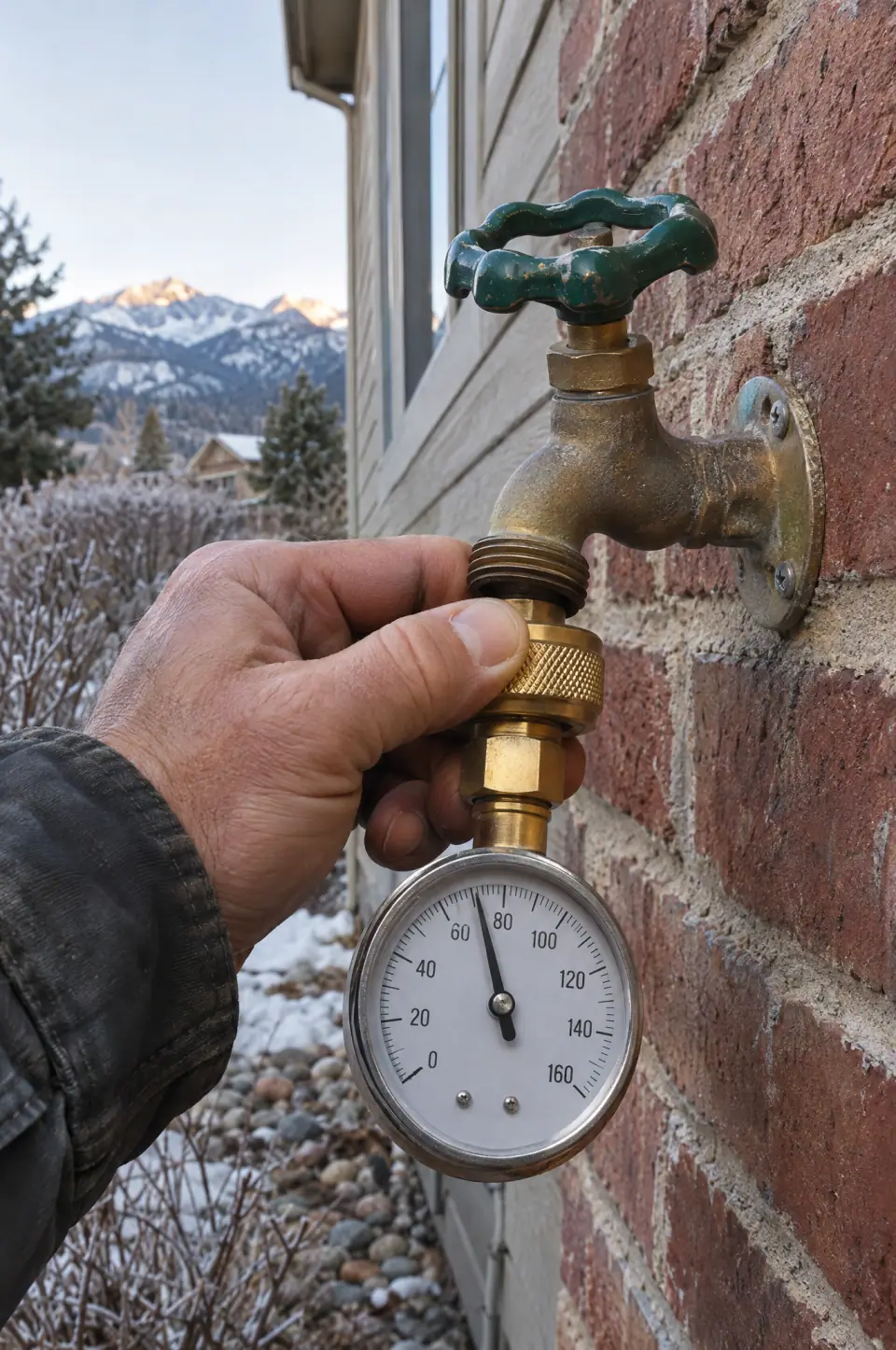
Plumbing maintenance in Denver is mostly about two things: catching parts that are wearing out before they leak, and getting the house ready for winter. Neither takes long. Skipping them is how a seized shutoff valve or a forgotten garden hose turns into a flooded basement.
Plumber Denver performs plumbing inspections, water heater flushes and seasonal winterizing for homes and commercial properties from Colorado Springs to Fort Collins. Here's what an inspection covers, a season-by-season calendar, and the winter steps that matter most on the Front Range.
Method
How the work is done
- 01
Walk the system
We start at the main shutoff and follow the water through the meter, pressure regulator, water heater and fixtures.
- 02
Test, don't assume
Static pressure is measured, valves are operated, and the water heater's relief valve and drain are checked.
- 03
Do the routine work
Flushing, aerator cleaning and winterizing steps get done during the visit; anything needing a repair is written up separately.
- 04
Leave a record
You get notes on what was checked, what's aging and what to watch, so the next visit starts from a baseline.
What a plumbing inspection covers
A plumbing inspection is a methodical walk through the system with gauges and a flashlight. The useful parts:
- Main shutoff and fixture stops. Valves that never move eventually seize. We operate them and note any that won't close.
- Water pressure. Plumbing code calls for a pressure-reducing valve when static pressure exceeds 80 psi. Excess pressure wears out fixtures, hoses and water heater relief valves.
- Water heater. Venting, relief valve, sediment and signs of corrosion at the base and fittings.
- Visible piping. Galvanized steel, polybutylene and older supply lines get flagged. See pipe repair and repiping for what replacement involves.
- Toilets and fixtures. Running toilets, worn flappers, dripping faucets and slow drains.
- Laundry hoses. Rubber washing machine hoses are a common flood source; braided replacements are a small upgrade.
If your water comes from Denver Water, its Lead Reduction Program replaces customer-owned lead service lines at no direct cost, and properties that may have one were automatically enrolled. If the pipe entering your basement looks dull gray and soft, ask the utility.
A Front Range maintenance calendar
Colorado's dry climate and sharp temperature swings set the schedule more than the calendar does. Treat these as targets, adjusted to the weather each year.
| Season | Task | Why it matters here |
|---|---|---|
| Early fall | Disconnect hoses, shut off and drain irrigation, drain the sprinkler backflow assembly | Hard freezes can arrive before leaves finish falling |
| Fall | Flush the water heater, test the relief valve | Heavy winter hot water demand is next |
| Winter | Watch pipes on exterior walls, crawlspaces and indoor meters during cold snaps | Subzero nights freeze pipes in unheated spaces |
| Spring | Turn irrigation back on slowly, check for split lines, schedule any required backflow test | Freeze damage often shows only once pressure returns |
| Summer | Check pressure, hose bibs and outdoor fixtures | Peak outdoor use exposes weak spots |
Older homes with mature trees should add a sewer camera inspection every few years. Roots find cracked clay joints, and our sewer line services page explains what the camera shows.
Winterize plumbing before the first hard freeze
Denver's average first freeze falls in early October, but the record spans early September to mid-November, so the job belongs on a September or early October weekend rather than a fixed date.
Hose bibs. Disconnect every hose. A frost-free sillcock only works when it can drain, and an attached hose traps water in the stem. Older non-frost-free bibs need their indoor shutoff closed and the outdoor faucet left open to drain.
Sprinkler system. Close the valve that feeds only the irrigation line, usually in the basement or a valve box near the meter. Drain the backflow assembly by opening its test cocks; it often sits outside and is the most freeze-prone part of the system. Lines are then drained or blown out, which many homeowners hire an irrigation company to do.
Inside. During extreme cold, Denver Water recommends keeping the thermostat at 65 degrees or higher and opening sink cabinet doors on exterior walls. Know where the main shutoff is before you need it.
Water heater flush and other once-a-year jobs
A water heater flush removes sediment before it hardens on the tank floor. The basic sequence:
- Turn the gas control to pilot or off, or switch off the breaker on an electric unit.
- Close the cold supply and open a hot faucet to break the vacuum.
- Run a hose from the drain valve to a floor drain or outside and let the tank empty.
- Briefly reopen the cold supply to stir up remaining sediment, then drain again until it runs clear.
- Close the drain, refill completely with a hot faucet open, then restore gas or power.
Old plastic drain valves sometimes won't reseal after years without use, which is one reason to have it done the first time. The anode rod is worth checking every few years. Tankless units need descaling on the manufacturer's schedule instead.
Ready to have it looked at? Send the details and we will confirm a time.
Request ServiceFAQ
Plumbing Maintenance questions
When should I winterize my plumbing in Denver?
Aim for late September or early October. Denver's average first freeze falls in early October, but it has arrived as early as September in some years. Disconnecting hoses and shutting off and draining the irrigation system early costs nothing, while a frozen backflow assembly or burst line costs a repair. Watch the forecast and don't wait for the first freeze warning.
How often should a water heater be flushed?
Once a year is a common recommendation for tank heaters, and the manufacturer's manual gives the official interval. Homes with harder water or heavy use may benefit from more frequent flushing. Tankless units need descaling rather than flushing, again on the schedule in the manual. If a tank has never been flushed in many years, the drain valve may not reseal, so plan for that.
Does my sprinkler backflow preventer need to be tested?
If your property is in your water provider's backflow program, yes. Colorado's drinking water regulations require water suppliers to control cross-connections, and assemblies in those programs are tested at installation and annually after that. Denver Water says irrigation assemblies in its program must be tested as the water is turned on in spring. Your provider's cross-connection office can confirm whether your system is listed.
What does a plumbing inspection include?
Expect the main shutoff and fixture stops to be operated, static water pressure to be measured, and the water heater's venting, relief valve and condition to be checked. Visible piping, toilets, faucets, drains, laundry hoses and outdoor faucets are also reviewed. The result is a list of what's working, what's aging and what needs repair, not a sales pitch for replacement.
Plumbing Maintenance across the Front Range
Request service
Ready when you are.
Tell us what is going on and where. We will confirm the details and set a time that works for you.