Service 04 / 07
Plumbing Fixture Installation in Denver
Faucets, toilets, sinks and shower valves installed to fit the plumbing that's actually in your walls, not just the box they came in.
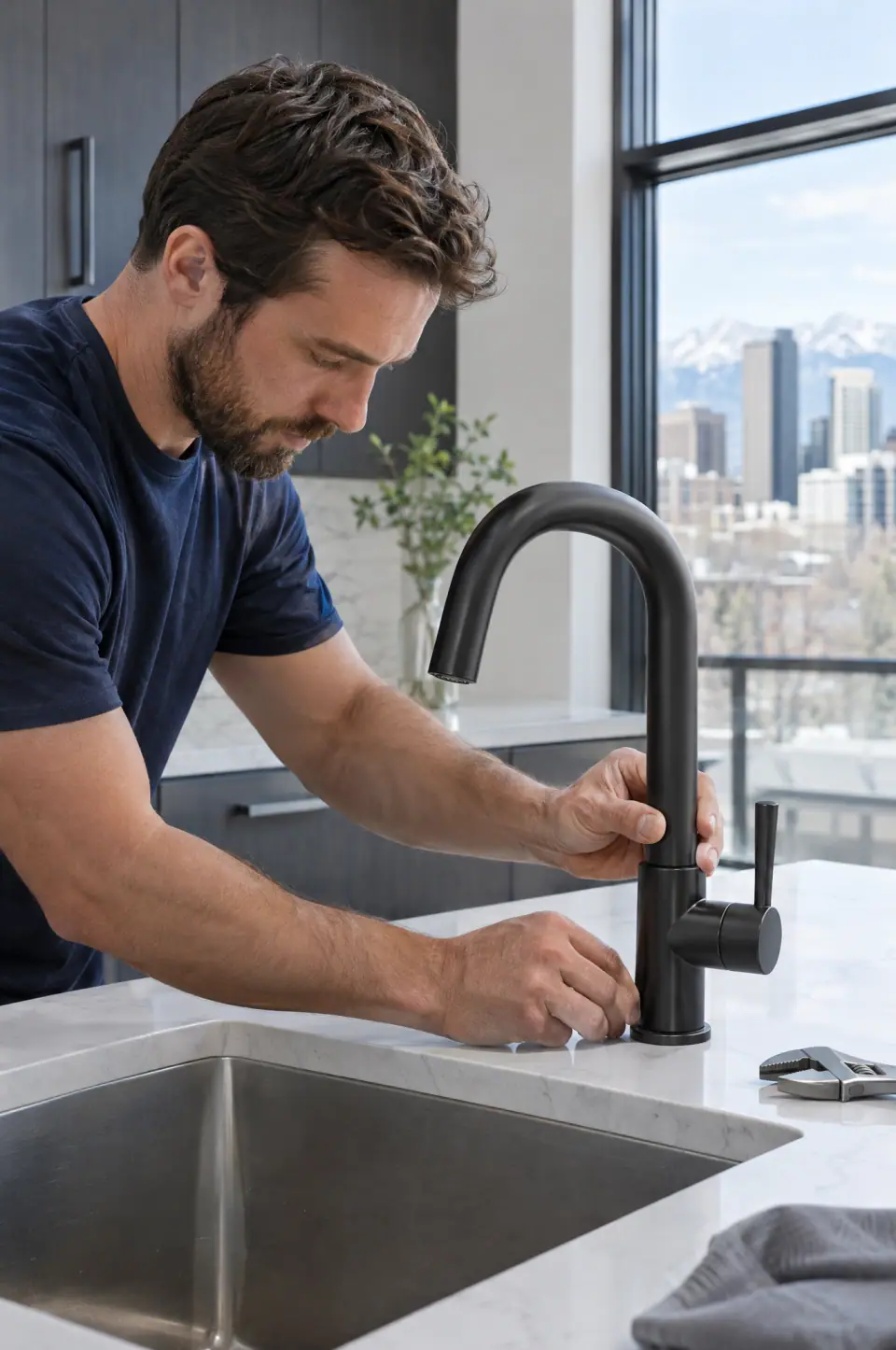
Plumbing fixture installation in Denver looks simple on the box and gets complicated at the wall. A new faucet is easy; the seized shutoff valve under the sink, the corroded drain arm and the trap that doesn't line up are where the time goes. A good install deals with those, not just the fixture.
Plumber Denver installs and replaces faucets, toilets, sinks and shower valves in homes and commercial spaces across the Front Range. This page covers what we check behind each fixture, how shower valve types differ, and what to measure before you buy.
Method
How the work is done
- 01
Confirm fit
We check rough-in dimensions, hole counts, valve brand and drain locations against the fixture you've chosen before anything is removed.
- 02
Isolate and remove
Water is shut off at the fixture stop or the main, and the old fixture comes out with the supply and drain connections inspected.
- 03
Replace what's failing
Seized stops, cracked supply lines and corroded trap parts are flagged and, with your approval, replaced while the area is open.
- 04
Set, connect and test
The fixture is mounted, connected and run under pressure, with drains filled and checked for leaks before we leave.
What gets checked behind the fixture
The fixture is the visible part. These are the parts that cause callbacks:
- Shutoff valves (stops). Older multi-turn stops often seize or won't close fully. A quarter-turn replacement makes the next repair easier.
- Supply lines. Old rigid or plastic supply tubes get swapped for braided connectors sized to the fixture.
- Traps and drain arms. The trap has to line up with the drain in the wall without strain. Corroded metal traps and slip joints held together by tape get replaced.
- Toilet flanges. A cracked or low flange, often caused by new flooring raising the floor height, is the usual reason a toilet rocks or leaks at the base.
If a sink drains slowly before the new fixture goes in, it will drain slowly afterward too. That's a drain cleaning job, and it's easier to do while the trap is off.
Toilets, faucets and sinks
Toilet installation
Measure the rough-in: the distance from the finished wall to the center of the closet bolts. Most toilets are built for 12 inches, but 10- and 14-inch rough-ins exist, especially in older homes. Bowl shape, seat height and flush rating are preferences; rough-in is not. The new toilet should also cover the old footprint, or you'll see unfinished flooring.
Faucet installation
Count the holes in the sink or counter and check the spacing. A single-hole faucet can cover a three-hole sink with a deck plate; the reverse doesn't work. Countertop thickness also matters, since some mounting kits have limited reach.
Sink installation
Drop-in sinks rest on the counter. Undermount sinks hang beneath it and are normally secured by the countertop fabricator, with the plumbing connected afterward. A garbage disposal needs a switched outlet under the sink, and a dishwasher drain has to connect in a way that keeps dirty water from siphoning back into the machine.
Choosing a shower valve
The shower valve sits inside the wall, and the handle and trim on the outside belong to the valve brand. That's why a new trim kit usually has to match the existing valve, and why changing valve types means opening the wall or working through an access panel. Current plumbing code requires shower valves to protect against scalding with pressure-balance or thermostatic control and a temperature limit.
| Valve type | How it controls temperature | Strengths | Trade-offs |
|---|---|---|---|
| Pressure-balancing | Reacts to pressure changes on the hot or cold side | Simple, common, widely serviced | Single handle sets volume and temperature together; temperature can still drift |
| Thermostatic | Senses outlet temperature and adjusts the mix | Steadier temperature, separate volume control on many models | Higher cost; more parts to service |
| Trim swap on existing valve | Unchanged | No wall opening | Limited to trims made for that valve |
If the old valve is an unprotected two-handle model, replacing it is worth considering during any bathroom remodel.
Colorado rules and what to measure before you buy
Colorado law limits the sale of new toilets and showerheads to WaterSense-listed models, so anything bought new from a store in the state should already comply. Denver Water has offered rebates for high-efficiency toilets that flush with less water than the WaterSense baseline; eligibility and amounts change, so check its rebate page before purchasing if you're a Denver Water customer. Other Front Range water providers set their own rebate programs.
Before the visit:
- Measure toilet rough-in, and note the flooring if it's being replaced.
- Count sink and countertop holes and note their spacing.
- Find the brand of any existing shower valve, usually stamped on the trim or the valve body behind it.
- Clear the cabinet under the sink and anything stored near the toilet or tub.
Ready to have it looked at? Send the details and we will confirm a time.
Request ServiceFAQ
Fixture Installation questions
Can I buy my own faucet or toilet and have a plumber install it?
Yes. Customer-supplied fixtures are common. Buy from a known brand so replacement parts are available later, keep the box and instructions, and measure before purchasing: toilet rough-in, sink hole count and spacing, and the shower valve brand if you're only changing trim. A mismatch discovered on site usually means a return trip to the store.
Do I need a permit to replace a toilet or faucet in Denver?
It depends on the city and the scope. Moving or adding a fixture, or changing drain or supply piping during a remodel, generally brings a permit into play; a straight swap in the same location may not. Denver Community Planning and Development and each suburban building department publish their own rules, so check with the one that covers your address before a remodel starts.
Why does my shower get hot or cold when someone flushes a toilet?
The flush drops pressure on the cold side, and an older shower valve without pressure-balance or thermostatic control can't compensate, so the mix swings hot. A pressure-balancing or thermostatic valve fixes it. Replacing the valve normally requires access from the wall behind the shower or through the tile, so it's often done during a bathroom remodel.
Does Colorado require low-flow toilets?
Colorado law restricts sales of new toilets and showerheads to WaterSense-listed models, which meet efficiency and flush-performance criteria. That covers what retailers sell, so a new toilet bought in the state should comply. Some water providers, including Denver Water, have offered rebates for toilets that use even less water than the WaterSense baseline; check the provider's current terms before you buy.
Fixture Installation across the Front Range
Request service
Ready when you are.
Tell us what is going on and where. We will confirm the details and set a time that works for you.