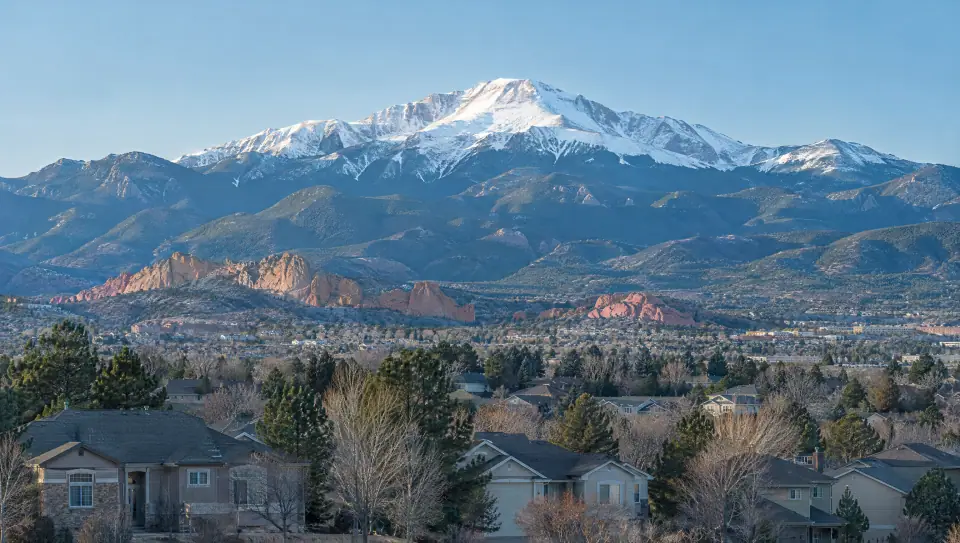
Southern Front Range / El Paso County
Plumber in Colorado Springs, CO
Drain, sewer, leak and water heater work for Colorado Springs homes and businesses, from Old North End basements to newer houses in Banning Lewis Ranch.
Plumber Denver works as a plumber in Colorado Springs for homeowners, landlords and commercial properties. We clear drains, fix leaks and damaged pipe, replace water heaters, install fixtures, and inspect, repair or replace sewer lines. The city sits at the south end of the Front Range area we cover, which runs north along I-25 through Monument and Castle Rock to Fort Collins.
Plumbing here has a few local quirks. Permits come from a regional building department rather than a city office, the utility leaves the sewer service line to the owner, and the housing runs from Victorian-era homes near downtown to subdivisions still going up on the east side. The notes below cover what each of those means for you.
The sewer line under your yard is yours to maintain
Colorado Springs Utilities cleans and maintains the wastewater mains in the street. The four-inch service line that runs from the main to your house is the customer's responsibility, and so is damage from a blockage in that line. When you report a backup, the utility checks whether the problem is in its main or in your service line. If it's yours, you arrange the repair.
That matters most in the older central neighborhoods. Houses in the Old North End, Old Colorado City and around Patty Jewett often still drain through cast iron inside and clay tile outside, and clay joints are where roots get in. A slow main drain that keeps coming back after it's cleared usually means something is wrong in the lateral itself.
Matching the age of the house to the likely problem
The city grew in waves, and each wave left behind different pipe. This is where we start looking, by era of construction:
| Built | Common materials | What we check first |
|---|---|---|
| Before 1950 | Galvanized steel supply, cast iron drains, clay tile sewer lateral | Low pressure at fixtures, rust at threaded joints, roots in the lateral |
| 1950s to 1970s | Copper supply, cast iron or early plastic drains | Stiff or seized shutoff valves, corroded drain sections |
| Late 1970s to mid-1990s | Polybutylene supply in some homes | Gray plastic supply pipe at the water heater and under sinks |
| 2000s and newer | PEX supply, PVC or ABS drains | Water heater age, expansion tank, pressure regulator |
None of these materials is a reason to panic. Galvanized pipe and polybutylene are the two we'd plan to replace on a schedule rather than wait on, since both tend to fail without much warning. See pipe repair and repiping for how a partial or full repipe works.
Water heater permits come from Pikes Peak Regional Building
The Pikes Peak Regional Building Department (PPRBD) was set up in 1966 by agreement between El Paso County and the City of Colorado Springs. It issues plumbing permits for the city, and water heaters are on its list of projects that need one. A few rules worth knowing:
- A homeowner can pull a permit only for work on a primary residence they own and live in.
- Rental properties need a licensed contractor registered with PPRBD.
- The permit holder is responsible for the work passing inspection.
- PPRBD lets you check a contractor's registration online or by phone before you hire.
On our water heater repair and replacement jobs, the permit and inspection are part of the plan from the start, so a like-for-like swap doesn't stall at the final step.
FAQ
Plumbing questions from Colorado Springs
Do I need a permit to replace a water heater in Colorado Springs?
Yes. The Pikes Peak Regional Building Department lists water heaters among the projects that require a permit. Homeowners can pull their own permit only for a primary residence they own and live in. Rentals and other properties need a licensed contractor registered with PPRBD, and the installation has to pass inspection.
Who pays to fix a sewer backup in Colorado Springs?
It depends on where the blockage is. Colorado Springs Utilities maintains the wastewater mains, and the customer is responsible for the service line between the main and the house. The utility will check which side the problem is on. If it's in your service line, you arrange and pay for the repair, so check whether your homeowner's policy covers it.
Is Colorado Springs tap water hard?
Most of the city's supply is mountain snowmelt piped in from the Western Slope, blended with local sources. Colorado Springs Utilities prints its current hardness and mineral numbers in its annual water quality report, so check that report before deciding how often to flush a water heater or descale fixtures rather than relying on a general rule.
Request service
Plumbing service in Colorado Springs.
Tell us what is happening and where. We will confirm the details and set a time.