Service 05 / 07
Sewer Line Repair in Denver
A sewer line fails slowly and then all at once. A camera shows what is wrong, where it is and how deep, before anyone picks up a shovel.
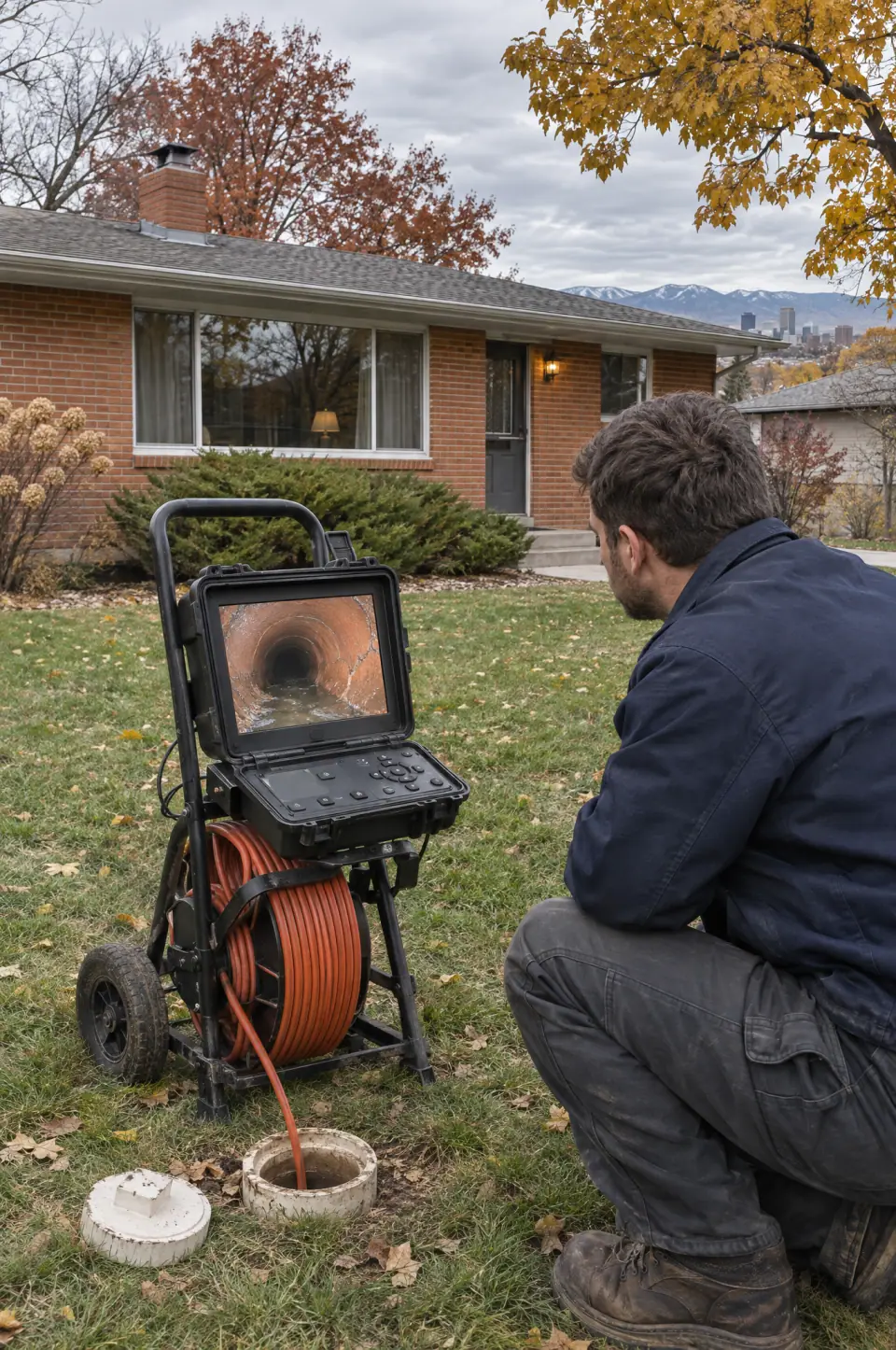
Sewer line repair in Denver almost always concerns the lateral: the private pipe that carries wastewater from a building to the public sewer main. The city treats that pipe as the property owner's responsibility, so when it cracks, sags or fills with roots, the repair decision is yours. It is also an expensive decision to make on a guess.
Plumber Denver inspects, repairs and replaces sewer lines for homes and commercial properties along the Front Range. The work starts with a camera inspection, so the repair matches the defect.
Method
How the work is done
- 01
Clear and inspect
If the line is blocked, we open it enough to pass a camera, then record its length from the cleanout toward the main.
- 02
Locate the defect
A transmitter in the camera head lets us mark the defect's position and approximate depth at the surface.
- 03
Lay out the options
You see the footage, and we explain the repair choices that fit that pipe, that depth and that site.
- 04
Repair and re-inspect
After the repair, a second camera pass confirms the new section is sound and flowing.
Who owns the sewer line in Denver
The City and County of Denver maintains the public sewer mains. Its Department of Transportation and Infrastructure states that the service line (lateral) is the property owner's responsibility up to and including the tap into the main sewer line. In practice that means a broken pipe under the sidewalk or street, or a failed connection right at the main, is generally still the owner's repair.
Ownership rules are set locally. Aurora, Lakewood, Fort Collins, Colorado Springs and the sanitation districts around the metro each publish their own. Confirm with the utility that bills you for sewer before assuming who pays.
What a sewer camera inspection shows
Older laterals are commonly vitrified clay or cast iron; newer ones are usually PVC. Each fails in its own way, and a camera inspection identifies which problem you have:
- Root intrusion at joints, from fine hair roots to masses that fill the pipe.
- Offset joints, where one section has shifted relative to the next.
- Bellies, low spots where the pipe has sagged and holds water and solids.
- Cracks and fractures, which let in roots and soil.
- Collapse, where part of the pipe has lost its shape.
- Corrosion and scale inside cast iron.
Freeze-thaw cycles and the swelling clay soils in parts of the Front Range shift soil around rigid pipe. Large trees near the line raise the odds of roots. If you are buying an older home, a sewer camera inspection before closing costs far less than discovering a collapsed lateral afterward. Recurring clogs that don't involve pipe damage are a drain cleaning job.
Repair or replace: matching the fix to the defect
| What the camera finds | Typical approach | Notes |
|---|---|---|
| Light roots at one or two joints, pipe otherwise sound | Root cutting and scheduled cleaning | Roots return; plan on repeat service |
| One broken or offset section | Spot repair at that location | Requires digging at the marked spot |
| A belly in one area | Re-lay that section at proper slope | Cleaning alone won't fix a sag |
| Damage along much of the line | Full sewer line replacement | Largest job; often the better long-term choice |
You will also hear about trenchless methods such as pipe lining and pipe bursting. Whether either suits a given line depends on pipe material, diameter, condition and access. A liner follows the shape of the old pipe, so it cannot correct a belly.
Excavation requires utility locates through Colorado 811 before digging. Denver generally requires a permit for sewer service line repair or replacement, and work in the public right-of-way carries its own licensing and permit rules. If a cracked drain inside the house is the problem, see pipe repair.
Sewer backup: what to do right now
- Stop all water use in the building, including laundry, dishwashers and toilets.
- Keep people and pets away from sewage. Wear gloves and boots if you must go near it.
- Don't pour chemicals into the drains; they add a hazard and rarely help.
- Check with neighbors. If they are backing up too, report it to the city or your sewer utility.
- Document the damage with photos for your insurer. Sewer backup coverage is often a separate endorsement, so check your policy.
Cleanup is its own job. Carpet, drywall and insulation soaked by sewage generally need to come out rather than be dried in place, and hard surfaces need cleaning and disinfecting. Once the line is flowing again, a camera inspection tells you whether the backup was a one-time clog or a sign the lateral is failing. For the plumbing inside the house, our residential plumbing services page covers each system room by room.
Ready to have it looked at? Send the details and we will confirm a time.
Request ServiceFAQ
Sewer Line Services questions
Who pays for sewer line repair in Denver, the city or the homeowner?
In Denver, the property owner. The city's Department of Transportation and Infrastructure states that the sewer service line is the owner's responsibility up to and including the tap into the main, while the city maintains the public main. Other Front Range cities and sanitation districts set their own rules, so check with your sewer provider if you live outside Denver.
Should I get a sewer scope before buying a house?
For an older home, yes. A general home inspection usually doesn't include the sewer lateral, and problems such as roots, offsets, bellies or a collapsed section aren't visible from inside the house. A camera inspection before closing tells you what condition the line is in while you can still negotiate.
Can tree roots be removed from a sewer line for good?
Cutting roots clears the pipe, but the roots grow back as long as the opening that let them in is still there. Scheduled cleaning keeps a line with minor intrusion working. Removing the problem permanently means repairing or replacing the joints or sections where roots get in.
Do I need a permit to repair a sewer line in Denver?
Generally, yes. Denver requires permits for most sewer service line repair and replacement, and work in the public right-of-way has separate licensing and permit requirements. Rules differ in other cities. Any excavation also requires a utility locate request through Colorado 811 before digging. Check with the local building or public works department for the requirements that apply to your address.
Sewer Line Services across the Front Range
Request service
Ready when you are.
Tell us what is going on and where. We will confirm the details and set a time that works for you.